
 By
By
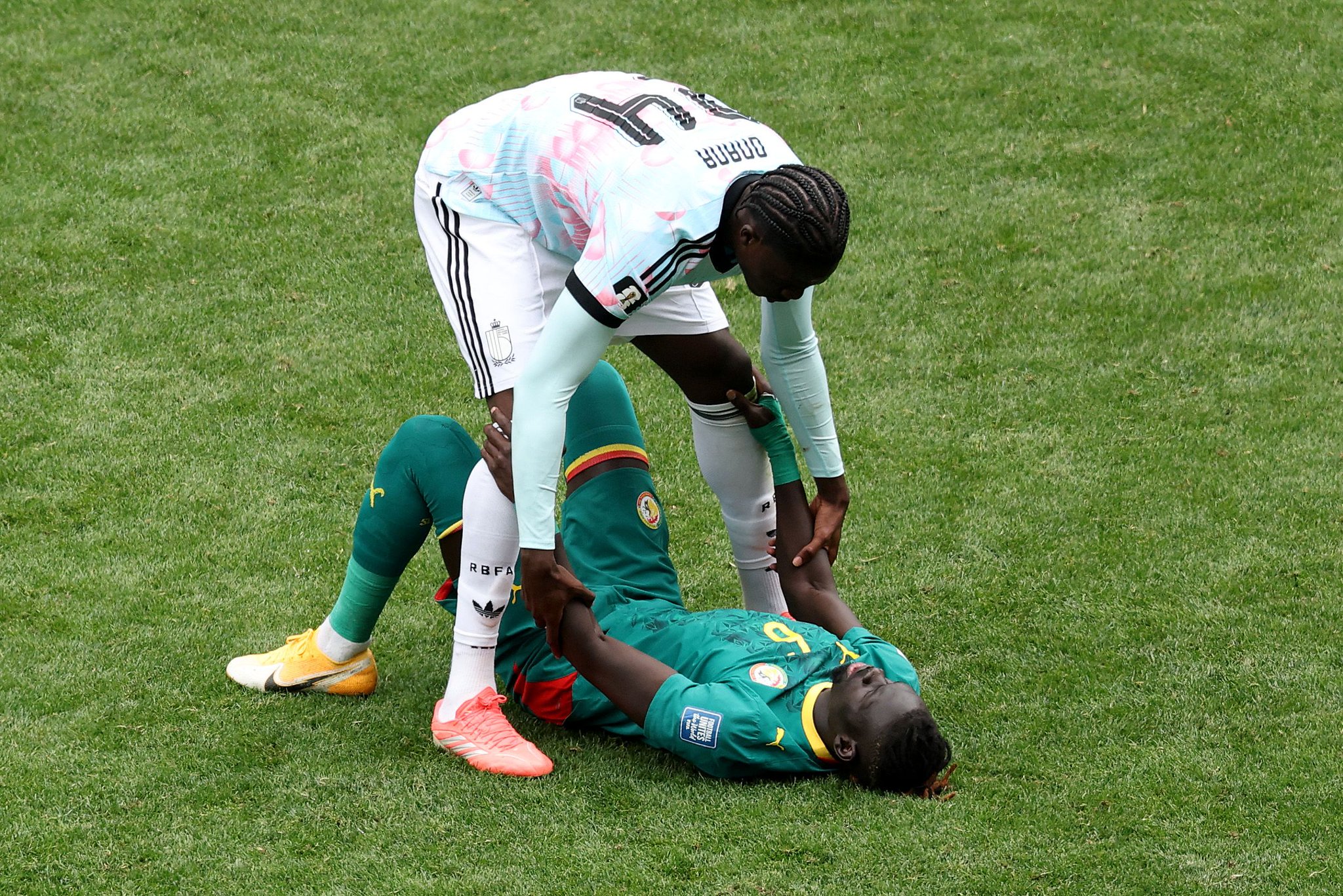
This article could easily have been titled Pape Thiaw: Between Garcia’s Hammer, the Referee’s Anvil, and CAF’s Sword of Damocles. While the Lions dominated the pitch until the 85th minute, the final moments of this Belgium–Senegal match spiraled into a complete rout. A collective collapse that lays bare two cruel realities: the geopolitical cynicism of international football and the managerial amateurism of our own technical staff.
The Conductor of Cynicism
Could Pape Thiaw really challenge the match events imposed by Rudi Garcia on the referee? Did he even have the regulatory capacity and the right to do so? Well aware that he was under the threat of a CAF sanction, the national coach knew his hands were tied. Faced with the slightest vehement protest, the guillotine of a red card and an extended suspension threatened to leave his team orphaned. In this Catch-22 situation, Thiaw chose the lesser of two evils: to remain silent and endure.
Rudi Garcia, a seasoned veteran of European benches, perfectly exploited this flaw. It was pure cynicism. Knowing his counterpart was condemned to silence under pain of further punishment, the Belgian coach played his part to the fullest: pressuring the fourth official, making grand gestures, putting on a permanent show. Facing him was a referee under influence, susceptible to the power asymmetry embodied by a coach with a European resume up against a weakened African technician. Caught between the uproar of the Belgian bench and the forced silence of the Senegalese bench, the officiating chose to manage the noise rather than the rules.
This “double standard” raises a frustrating institutional question: if CAF shows relentless severity in muzzling our coaches at the slightest slip of the tongue, why do FIFA and international governing bodies allow Western managers to dictate their law through emotional blackmail? The Senegalese Football Federation (FSF) must urgently step up, video evidence in hand, to ensure our technicians are no longer the submissive victims of this lopsided pressure.
The Sabotage Gamble
However, hiding solely behind the refereeing or Garcia’s craftiness would be a journalistic failure. Because the trap laid from the outside found a dramatic, almost incomprehensible echo inside the Senegalese staff itself.
What unfolded from the 85th minute onward was no longer a matter of tactics; it bordered on outright sabotage. While the team was holding its ground, Pape Thiaw chose the worst possible moment to launch a gamble of rare irresponsibility. By making massive substitutions, he threw players into crunch time who had never played together on the pitch, lacking any collective experience in high-level competition—some even discovering the pitch for the very first time at this level.
Why indulge in such a roll of the dice? Did he even comprehend the risk involved? We had warned, long before this encounter, about the need to use the bench wisely and to integrate backup forces progressively and coherently. By confusing fresh blood with total improvisation, Thiaw exposed his ignorance of managing a group’s critical moments. He destroyed his own team’s chemistry, created the conditions for chaos, and handed the Belgians the weapons to overturn a situation that had otherwise been compromised.
Time for Accountability
This match leaves a bitter taste. It reveals a lack of synergy and understanding within a technical staff incapable of deploying an asymmetric response. Even when silenced, a manager must know how to delegate: sending an assistant to take over constructive protesting, briefing his captain to demand VAR reviews, or documenting injustices in real-time. None of this was done.
The defeat against Belgium exposes the trickery of top-tier football, where a naive respect for the rules is no longer enough. But above all, it sounds a harsh warning for the Lions’ management. You do not manage the end of an international match like a game of roulette. The flaws have been exposed; it is now up to those who run our football to draw the necessary conclusions before the curtain falls for good.
Mamadou Kassé
Journalist